
The market narrative around AI has largely focused on disruption: AI-native challengers, falling barriers to entry, commoditisation risk, and increasing pressure on SaaS pricing models. Although these are crucial dynamics to consider, they may overlook specific situations where the AI era could actually reinforce the competitive position of incumbent software providers — particularly those embedded deeply into workflows, regulation, and mission-critical infrastructure.
The issue is no longer simply:
“Does this company use AI?”
But also:
“Why will this company remain indispensable in an AI-native world?”
And ultimately:
“How can our incumbent position make us a winner of the AI transformation?”
Embeddedness Matters More Than Ever
Not all software businesses are equally vulnerable to disruption.
In many B2B environments, software is no longer simply a productivity tool layered onto existing operations. It has become part of the operational fabric of an industry itself. Over time, incumbent platforms often become deeply integrated into workflows, compliance processes, reporting structures, customer interactions, and broader market infrastructure. In these contexts, replacing a software provider is rarely a straightforward product decision. Migration can introduce operational disruption, execution risk, regulatory implications, retraining costs, and meaningful business continuity concerns. Even when newer AI-native solutions appear technologically attractive, the practical cost of switching can remain prohibitively high. This is particularly visible in sectors such as capital markets infrastructure, legaltech platforms supporting the practice of law, clinical workflow systems, cybersecurity orchestration, and other environments where reliability and continuity are critical. AI may significantly improve interfaces, automation, and productivity layers. However, this does not necessarily weaken incumbent providers. In many cases, it may instead strengthen the value of existing platforms that already sit at the centre of customer workflows and data environments. The stronger the operational dependency, the stronger the potential strategic position of the incumbent.
Context Is Becoming More Valuable Than Raw Data
Much of the current AI discussion focuses on data scale and model capability. Yet in enterprise environments, raw data alone rarely creates durable competitive advantage. What increasingly matters is context. Enterprise decision-making often depends on years — sometimes decades — of accumulated institutional knowledge, industry-specific logic, operational nuance, and highly specialised workflows. AI models can process information at extraordinary speed, but interpretation within a complex business environment still requires contextual understanding. This becomes particularly important in industries where edge cases matter, where workflows are highly specialised, or where decisions carry legal, financial, or operational consequences. For many incumbent software companies, the real moat may therefore not simply be proprietary data, but rather contextualised operational intelligence built through long-standing customer relationships and years of workflow integration. This distinction is critical. Data can increasingly become commoditised. Context is far harder to replicate. In this environment, incumbents with deep vertical expertise and embedded operational knowledge may possess advantages that AI-native entrants struggle to reproduce quickly.
Trust, Regulation and Accountability Become Strategic Assets
The AI era is also increasing the strategic importance of trust. In sectors such as financial services, healthcare, legal services, defense, and cybersecurity, users cannot tolerate significant operational risk. Hallucinations, weak governance, black-box decision making, or inconsistent outputs are not merely inconveniences — they can create material legal, regulatory, reputational, or security consequences. As AI becomes more integrated into enterprise decision-making, buyers are likely to place increasing value on providers that can combine innovation with accountability, auditability, governance, and operational reliability. This may create structural advantages for incumbent software providers with established reputations, trusted brands, long-standing customer relationships, and proven regulatory credibility. In these environments, “safe AI adoption” may ultimately matter more than “fast AI adoption.” The winners may therefore not always be the companies moving the fastest, but the companies customers trust most when the stakes are high.
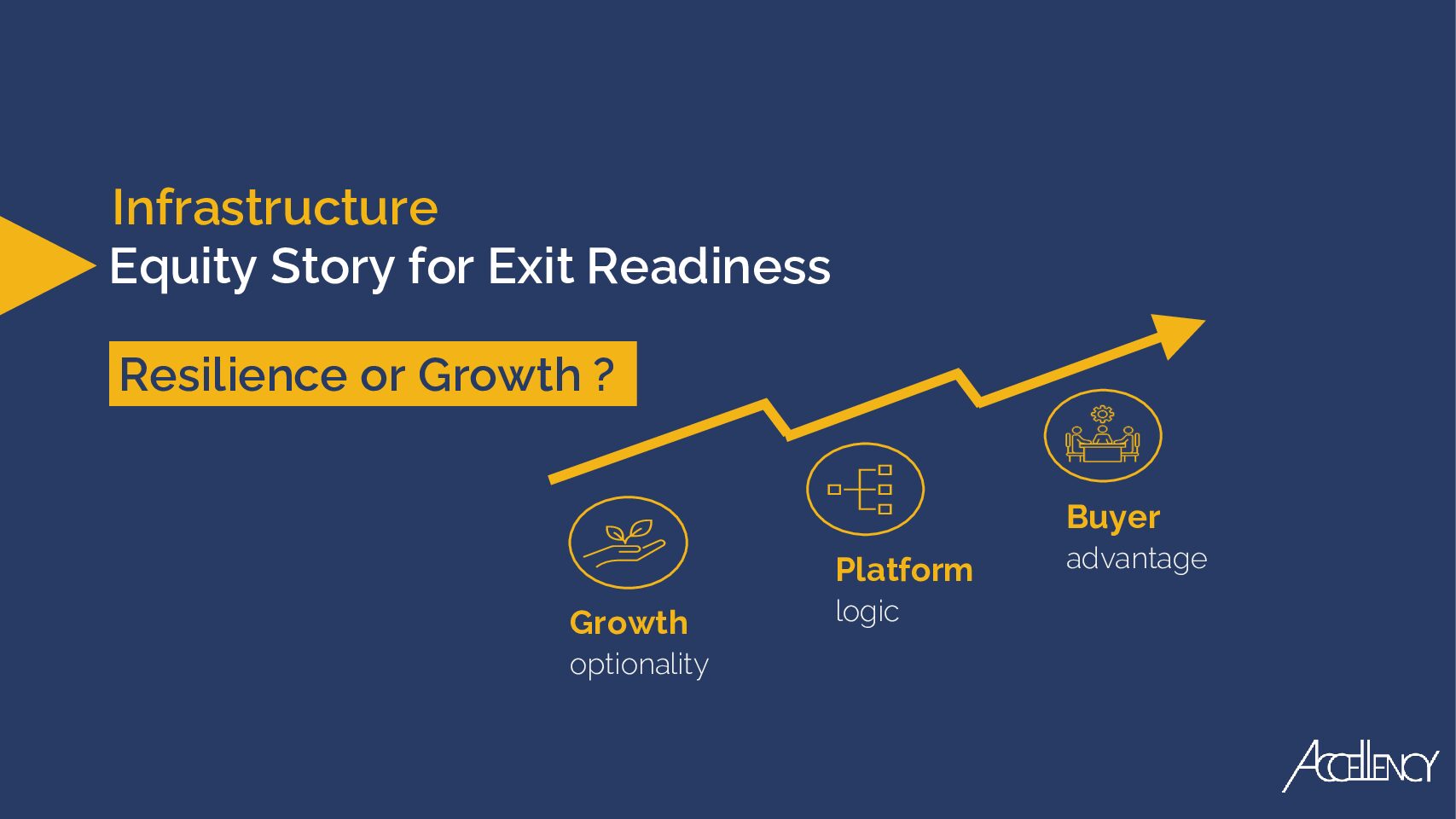
The Equity Story Must Evolve
Historically, software equity stories have largely centred around growth metrics: ARR expansion, retention rates, upsell potential, margin scalability, and category leadership. These metrics remain essential. However, the AI transition is shifting investor attention toward a broader set of strategic questions focused on durability and defensibility.
Increasingly, investors are assessing:
- how embedded a platform is within customer workflows,
- whether the software forms part of critical infrastructure,
- the depth of proprietary contextual knowledge,
- the strength of customer trust and distribution,
- and the company’s ability to integrate AI safely into existing environments.
The strongest equity stories in the AI era may therefore not be those built purely around AI functionality itself.
Instead, they may be the stories of companies that are structurally difficult to displace because they combine:
- deep workflow integration,
- contextual intelligence,
- trusted customer relationships,
- regulatory credibility,
- and mission-critical reliability.
Conclusion
AI will undoubtedly reshape software markets and redefine competitive dynamics across the industry. However, its impact is unlikely to be uniform, and the assumption that AI will automatically weaken incumbent software providers may prove overly simplistic. In many enterprise verticals, the companies best positioned to benefit from the AI transition may not necessarily be the newest entrants, but rather the incumbents that already sit at the centre of mission-critical workflows, possess deep contextual intelligence, and operate within highly trusted and regulated environments. For management teams and investors alike, this requires a shift in perspective. The conversation should no longer focus solely on whether a company has integrated AI capabilities into its product offering. More important questions are beginning to emerge around strategic positioning, defensibility, and value creation. The issue is no longer simply: “Does this company use AI?” But also: “How can our incumbent position make us a winner of the AI transformation?” And ultimately: “Why will this company remain indispensable in an AI-native world?” There is also a broader strategic and financial question that remains unresolved across the software industry: “Will AI primarily drive new top-line growth and customer adoption, or will its greatest impact be delivering efficiency gains and profitability improvements at the bottom line?” The answer to that question may ultimately determine which software companies create the most durable value in the AI era — and which equity stories prove most compelling over the next decade.